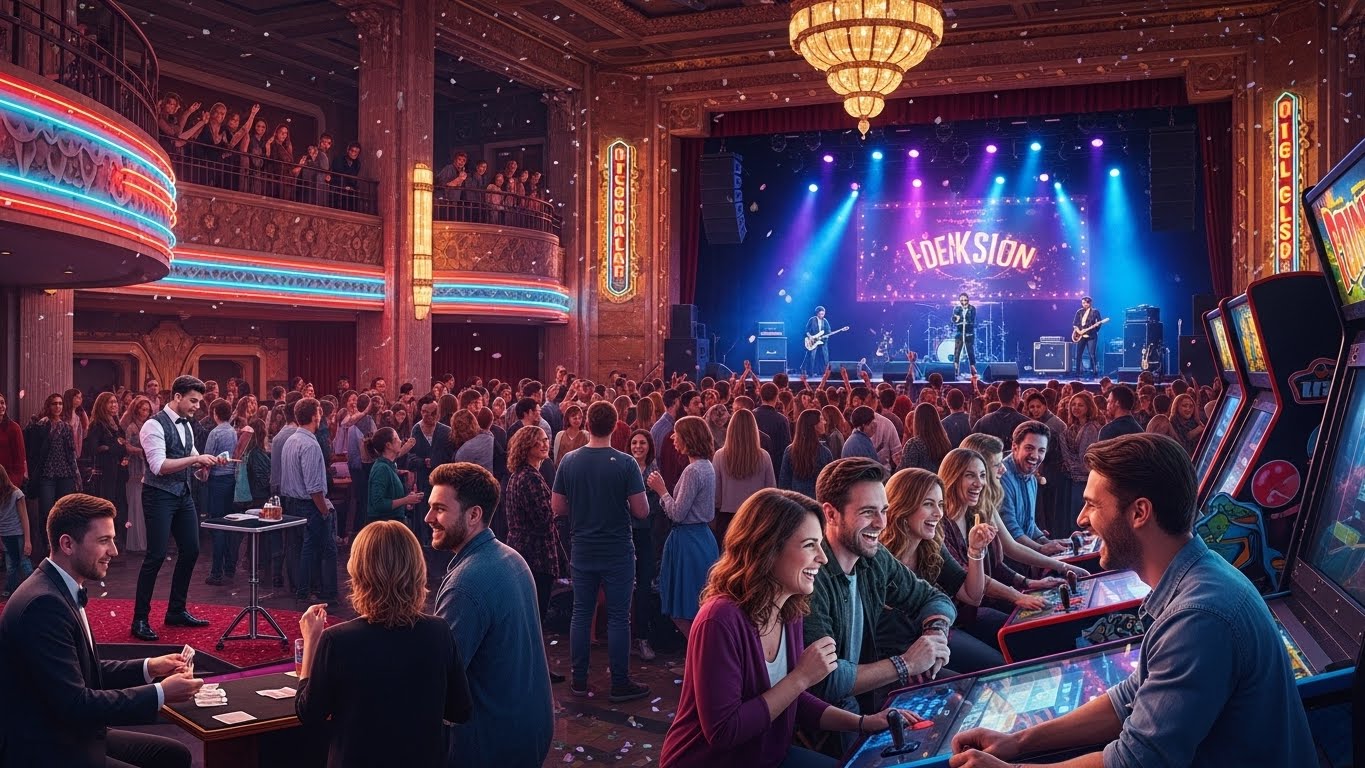

The Evolving Landscape of Entertainment: A Journey from Past to Present
Entertainment has always played an integral role in human culture, evolving alongside technology, society, and our ever-changing desires for escapism, enjoyment, and connection. From the early days of oral storytelling to the rise of digital platforms today, entertainment has consistently adapted to the times. This article takes you on a journey through the history of entertainment and explores how modern technologies are reshaping the industry. We’ll also dive into how various forms of entertainment influence our lives, offering both reflection and respite from the world around us.
The Birth of Entertainment: From Stories to Stage
Before the age of television, movies, or even radio, entertainment was a social experience, often centered around community gatherings and oral traditions. In ancient civilizations, storytelling played a crucial role in preserving history, myths, and knowledge. These stories were told around campfires, in public squares, or within the confines of temples. The Iliad and the Odyssey, for instance, were not just epic tales but also vehicles for educating audiences about values, history, and culture.
The next step in entertainment’s evolution came with the advent of theater. Ancient Greece saw the emergence of dramatic performances, which grew to include comedy, tragedy, and later, more experimental forms of performance art. These live shows provided an avenue for people to experience emotions on stage—laughter, sorrow, fear—and collectively experience catharsis. From the bustling forums of ancient Rome to Shakespeare’s Globe Theatre in England, live performance was the entertainment of its time.
The Rise of the Mass Media
Fast forward to the late 19th and early 20th centuries, and the rise of mass media began to redefine what it meant to be entertained. The invention of the radio and the subsequent birth of television brought entertainment into people’s homes on a scale never seen before. For the first time, individuals could experience performances from the comfort of their living rooms, and entertainment became something that could be shared across vast distances, transcending geographical boundaries.
The golden age of radio in the 1920s to 1940s allowed families to gather and listen to news, music, dramas, and variety shows together. The radio was a window into the outside world, and it brought people closer, fostering a sense of shared experience. The arrival of television in the 1950s took this experience even further, with the added dimension of visual storytelling. Iconic television shows like “I Love Lucy,” “The Twilight Zone,” and “The Ed Sullivan Show” made waves in pop culture and became part of the global conversation. They set the stage for modern-day entertainment and introduced the notion of ‘broadcasting’ entertainment to millions.
The Silver Screen Era: Hollywood’s Golden Age
Movies, often considered the most influential form of entertainment in the 20th century, experienced their heyday during Hollywood’s Golden Age. From the 1930s to the 1950s, the motion picture industry became synonymous with glamour, storytelling, and mass appeal. Iconic figures like Marilyn Monroe, Humphrey Bogart, and James Stewart became household names, and studios such as Warner Bros., MGM, and Paramount Pictures ruled the industry.
Cinema provided a window to new worlds, whether through historical epics, musical spectacles, or poignant dramas. For a few hours, moviegoers could escape their reality and immerse themselves in the magic of film. The introduction of color films, soundtracks, and special effects created an ever-expanding range of cinematic experiences. Hollywood not only entertained but influenced fashion, behavior, and societal norms.
The Digital Revolution: Changing the Game
The arrival of the internet in the late 20th century set the stage for a major shift in the entertainment industry. With the advent of online streaming, social media, and digital platforms, entertainment became more accessible and individualized. Platforms like YouTube, Netflix, and Spotify transformed the way we consume music, films, and television shows. No longer were viewers tied to scheduled programming or limited to a handful of broadcast channels.
Streaming services allowed content creators to have more freedom to produce and distribute material directly to audiences. Shows like “Stranger Things” and “The Crown” on Netflix, or “The Mandalorian” on Disney+, demonstrate how digital platforms have disrupted traditional television networks and even film production. The ability to binge-watch entire seasons of shows in one sitting fundamentally altered how we experience television, making the medium more immersive and personal.
Simultaneously, social media platforms like Instagram, TikTok, and Twitter have turned every user into a potential content creator. The rise of influencers, viral challenges, and meme culture has introduced new forms of entertainment, often shaped by collective online experiences. Entertainment is no longer confined to traditional celebrities and artists—anyone with a smartphone can create content that resonates with a global audience.
The Impact of Technology: Virtual Reality, Augmented Reality, and Gaming
The next frontier in entertainment lies in the intersection of technology and immersive experiences. Virtual Reality (VR) and Augmented Reality (AR) are transforming how we interact with media. VR creates entirely digital environments where users can immerse themselves in fantastical worlds, from playing games like “Beat Saber” to exploring 360-degree video experiences. AR, on the other hand, overlays digital objects onto the real world, allowing for interactive experiences, such as Pokémon GO or Snapchat filters.
Video games have been at the forefront of these technological advancements, offering not just a form of entertainment but a fully interactive medium where players can take on the roles of characters in complex narratives. The gaming industry now rivals that of Hollywood, with massive franchises like “Fortnite,” “Grand Theft Auto,” and “The Legend of Zelda” bringing in billions of dollars annually. In addition to the games themselves, streaming platforms like Twitch allow gamers to share their gameplay and interact with an audience in real-time, further blurring the lines between consumer and creator.
The Globalization of Entertainment
In the past, entertainment was largely region-specific. Films were made in Hollywood, music came from pop charts in the US or UK, and television shows were produced for domestic audiences. However, in today’s interconnected world, entertainment has become increasingly global. Streaming platforms have facilitated access to films and TV shows from around the world, allowing people to enjoy content in foreign languages and across cultural boundaries.
K-pop is a prime example of this global phenomenon. What was once a localized genre in South Korea has now become a worldwide cultural sensation, with groups like BTS and Blackpink achieving immense success in markets far beyond Asia. Similarly, films like “Parasite,” “Roma,” and “Squid Game” have demonstrated that global audiences are hungry for diverse and inclusive content. The success of these international titles challenges the long-standing dominance of Western media and shows that entertainment is no longer confined to any one region.
The Future of Entertainment: What’s Next?
As we look toward the future, it’s clear that entertainment will continue to evolve in exciting and unexpected ways. With technologies like AI, blockchain, and 5G on the horizon, the possibilities for new forms of interactive entertainment seem limitless. AI-generated content could lead to personalized films and music tailored specifically to an individual’s tastes, while blockchain could revolutionize how we experience ownership and distribution in the digital age.
Moreover, as our attention spans shrink and our digital experiences become more fragmented, creators will face the challenge of developing content that captivates us in increasingly shorter bursts of time. The next generation of entertainment may prioritize quick, interactive experiences over long-form content. It’s an exciting time to be a part of this ongoing transformation, as the boundaries of what constitutes entertainment expand beyond our imagination.
Conclusion: The Enduring Appeal of Entertainment
Entertainment has been an enduring force in human society, continuously evolving to reflect changes in technology, culture, and human behavior. From ancient stories shared around the fire to the global streaming platforms of today, entertainment has been a constant source of connection, joy, and reflection. As new technologies continue to emerge and new forms of entertainment take shape, one thing remains clear: our desire for stories, experiences, and creative expression will continue to thrive.
The future of entertainment is wide open, full of untapped potential. Whether we find it in the depths of a virtual world or in the simplicity of a song, entertainment will always have a place in our hearts—offering moments of joy, escape, and shared human experience.