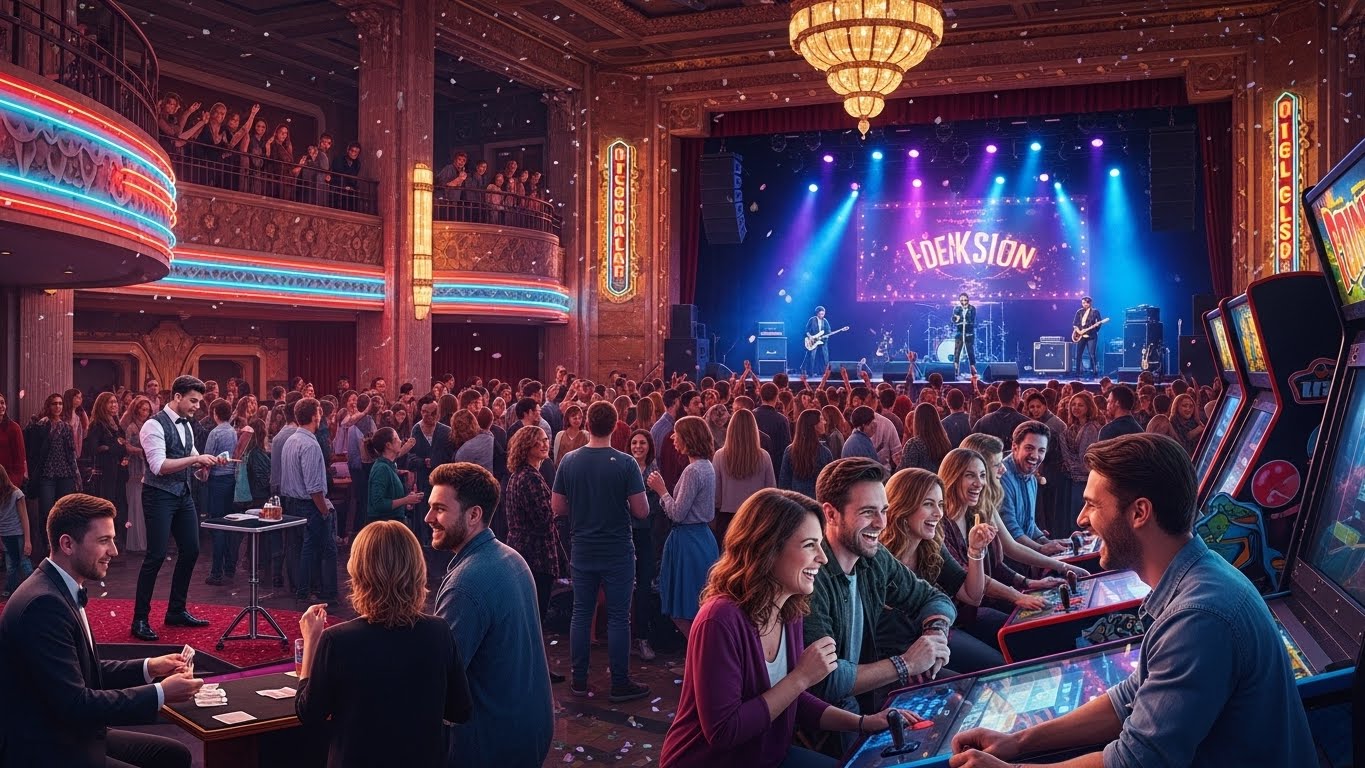

Entertainment is an essential part of the human experience. From ancient rituals and storytelling around the fire to the sophisticated, high-tech immersive worlds we engage with today, entertainment has continuously evolved to meet the needs and desires of each generation. It is a reflection of our culture, society, and advancements in technology, and as these elements change, so too does the way we seek amusement, escapism, and connection. This blog post will explore the fascinating evolution of entertainment, tracing its roots from ancient times to the present, and examining how cultural shifts and technological progress have forever altered the landscape of leisure.
The Beginning of Entertainment: Storytelling and Rituals
In the earliest days of human civilization, entertainment was often tied to social rituals, community bonding, and spiritual practices. Long before the written word, humans engaged in storytelling, passing down myths, legends, and histories orally from generation to generation. These stories were not merely a form of entertainment; they were integral to the survival of cultural knowledge, moral codes, and societal norms. People gathered around fires to recount tales of gods, heroes, and animals, which helped explain the mysteries of the world around them and connect individuals to their ancestors.
These ancient forms of entertainment were communal experiences that involved the collective participation of communities. Storytelling was often accompanied by music and dance, and sometimes included theatrical performances that reenacted important events or mythological tales. Early forms of theater, as seen in ancient Greek and Roman cultures, were powerful tools for social cohesion, offering audiences an opportunity to reflect on their own lives and the world they inhabited. The tragedies of Sophocles, the comedies of Aristophanes, and the grand spectacles of Roman gladiatorial games became not only means of entertainment but also spaces for social commentary, political expression, and religious devotion.
The Rise of Literature and Music: Entertainment with Depth
As civilizations developed, so did the complexity of entertainment. In the ancient world, literature and music became increasingly sophisticated. The invention of writing in Mesopotamia, Egypt, and later Greece and Rome, gave birth to an entirely new form of entertainment: the written word. Epic poems like the Epic of Gilgamesh and The Iliad provided both entertainment and intellectual stimulation, offering epic tales of love, loss, and heroism while also exploring themes of morality, fate, and the divine. These works were often performed aloud, combining elements of theater with narrative storytelling.
The rise of literature was followed closely by the evolution of music. In ancient Greece, music was considered an essential part of education, and it was integral to both entertainment and intellectual life. Instruments like the lyre and aulos, combined with the rich vocal traditions of ancient cultures, created an environment in which music played a central role in both public life and private leisure. The ancient Greeks and Romans held performances in theaters and amphitheaters, where audiences enjoyed music, poetry, and drama in elaborate public spectacles.
With the advent of the printing press in the 15th century, literature became more accessible to the masses. The works of writers like Shakespeare, Cervantes, and Goethe spread throughout Europe and the world, leading to the growth of novels as a major form of entertainment. As literacy rates grew, books became cheaper and more widely available, allowing for the democratization of entertainment in ways that had never been possible before. At the same time, music evolved into more formalized structures with the works of composers like Bach, Beethoven, and Mozart, who elevated music to a high art form enjoyed by both elites and the emerging middle class.
The Emergence of Cinema: A New Era of Visual Entertainment
The next major leap in the evolution of entertainment came in the late 19th and early 20th centuries with the invention of cinema. Motion pictures revolutionized the entertainment industry, giving birth to a new medium that combined visual storytelling, music, and performance in ways that no other form of entertainment had before. The first motion pictures were simple short films, but by the 1920s, cinema had evolved into a major cultural force. Silent films like those of Charlie Chaplin and Buster Keaton captivated audiences with their combination of slapstick humor, drama, and visual spectacle.
The advent of sound in cinema in 1927, marked by the release of The Jazz Singer, ushered in the era of “talkies” and forever changed the medium. Movies became more immersive, with actors delivering lines, singing, and engaging in dialogue that added a new layer of realism and emotional depth. Hollywood became the global hub of the film industry, and stars like Humphrey Bogart, Marilyn Monroe, and James Stewart captured the public’s imagination.
By the mid-20th century, cinema was a dominant force in global entertainment. The Hollywood studio system churned out blockbusters that were enjoyed by audiences worldwide. Iconic films like Gone with the Wind, The Godfather, and Star Wars became cultural touchstones that shaped public consciousness and provided a common cultural language across national boundaries.
The rise of television in the 1950s marked another shift in entertainment. Unlike cinema, which required a trip to the theater, television brought entertainment into people’s homes, providing them with access to news, comedy, drama, and even live events like the moon landing in 1969. The small screen offered audiences the ability to watch shows like I Love Lucy, The Twilight Zone, and MASH* in the comfort of their living rooms, creating a shared cultural experience for families and communities.
The Digital Revolution: Streaming, Gaming, and Interactive Entertainment
The late 20th and early 21st centuries saw a revolution in how entertainment was created and consumed, fueled by the rise of digital technologies. The development of personal computers, the internet, and high-speed broadband connections allowed entertainment to become more personalized and accessible. In the early 2000s, streaming services like Netflix, Hulu, and Amazon Prime Video completely transformed the television and film industries. Instead of waiting for scheduled programming or going to a movie theater, viewers could now watch whatever content they wanted, whenever they wanted, on a variety of devices.
Streaming services also introduced original content, with platforms like Netflix creating hit shows like House of Cards and Stranger Things. These shows not only attracted millions of viewers but also reshaped the way television was produced, with streaming platforms increasingly taking creative control and offering an alternative to traditional television networks. The rise of on-demand content also led to the emergence of “binge-watching” culture, where audiences would watch entire seasons of shows in one sitting.
At the same time, video gaming emerged as one of the largest and fastest-growing forms of entertainment worldwide. Once seen as a niche hobby, video games have now become a multi-billion-dollar industry that reaches people of all ages and backgrounds. Major game franchises like Super Mario, Call of Duty, and Fortnite have captured the imaginations of millions, offering complex narratives, immersive worlds, and interactive experiences that rival traditional forms of entertainment in terms of both scale and cultural impact.
Interactive entertainment also grew with the rise of virtual reality (VR) and augmented reality (AR) technologies. VR allows users to step into entirely digital worlds and interact with them in ways that were once confined to science fiction. AR blends the physical world with digital overlays, offering new ways to experience games, education, and even social interactions. These technologies have only just begun to transform the entertainment landscape, and their potential to create entirely new forms of media is immense.
Social Media and the New Age of User-Generated Content
One of the most significant cultural shifts in recent years has been the rise of social media and user-generated content. Platforms like YouTube, Instagram, TikTok, and Twitch have empowered individuals to become content creators, bypassing traditional entertainment industry gatekeepers. Today, anyone with a smartphone or camera can create and share content with the world, whether it’s a viral video, a live-streamed gaming session, or a carefully curated Instagram post. This democratization of content creation has reshaped the entertainment industry, leading to the rise of influencers, streamers, and YouTubers who now command massive followings and sometimes even rival traditional celebrities in terms of popularity.
Social media platforms also allow fans and creators to interact in real-time, building communities around shared interests. Memes, viral challenges, and trending hashtags have become new forms of entertainment that thrive on interactivity and the viral nature of online content. This shift has changed how entertainment is consumed, as audiences no longer passively watch content but actively participate in its creation, sharing, and dissemination.
The Future of Entertainment: Immersive, Personalized, and AI-Driven
As we look to the future of entertainment, it’s clear that technology will continue to drive innovation. AI, machine learning, and data analytics will increasingly personalize content recommendations, allowing viewers to discover new shows, films, and music tailored to their tastes. Streaming services may use AI to create entirely new forms of media, where the narrative adapts based on viewer preferences or emotional responses.
Virtual reality and augmented reality are also expected to play a major role in the future of entertainment. As technology improves, we may see even more immersive experiences where viewers can explore 3D worlds, interact with characters, and even influence the outcome of stories in real time. The metaverse, a virtual universe made up of interconnected digital worlds, may become the next frontier in entertainment, offering infinite possibilities for gaming, socializing, and experiencing content in entirely new ways.
In conclusion, entertainment has come a long way from its humble beginnings in storytelling and ritual. Today, it encompasses a vast array of mediums, from literature and cinema to video games and virtual reality. As technology continues to evolve, so too will the ways in which we experience entertainment, creating new opportunities for connection, creativity, and innovation. One thing is certain: the future of entertainment is limitless, and we are only beginning to scratch the surface of what’s possible.