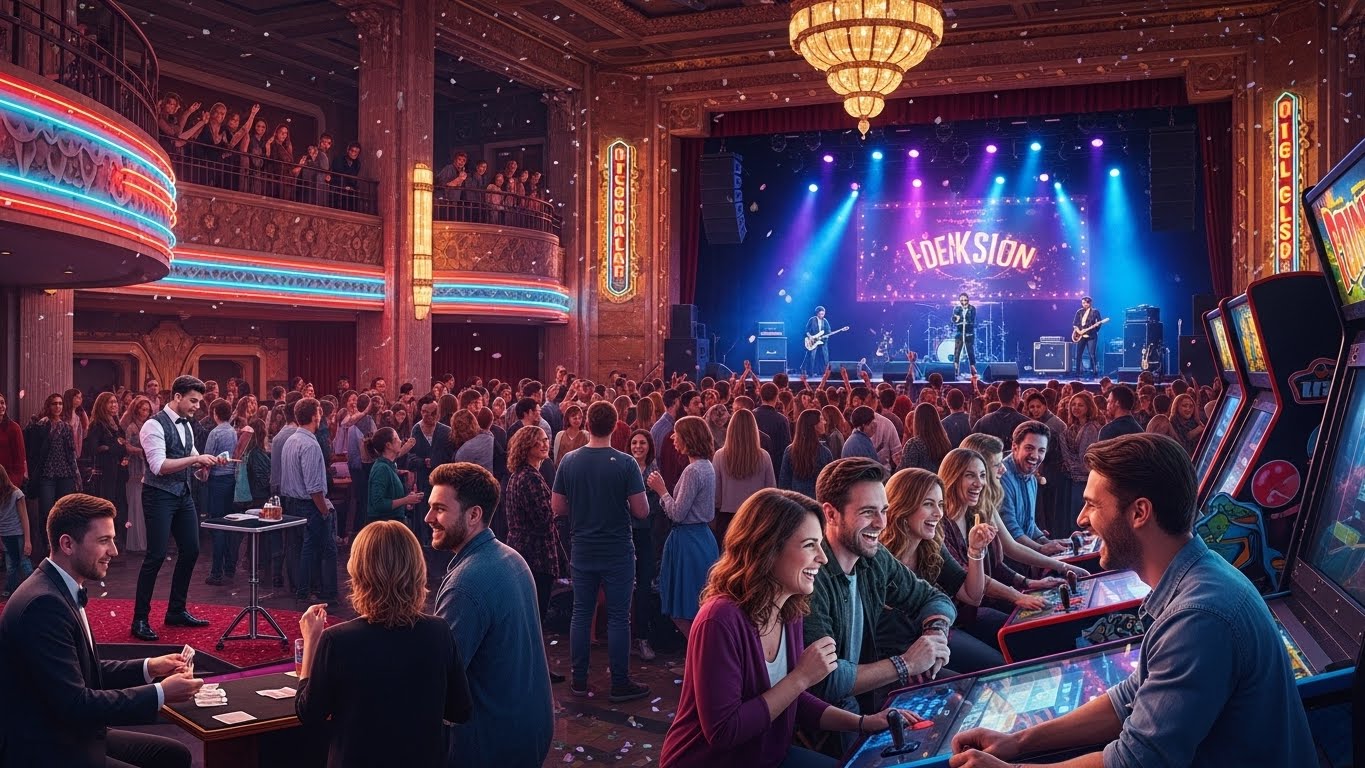
Entertainment has always been an essential part of human culture, a reflection of our emotions, stories, and imagination. Over centuries, it has transformed, adapted, and grown to encompass a wide range of mediums, genres, and experiences. From the first theatrical performances in ancient Greece to the high-tech, immersive experiences of the modern world, entertainment has evolved with the times. In this post, we’ll explore the diverse and dynamic world of entertainment, examining how technology, changing societal norms, and the demands of an ever-growing global audience shape what we enjoy today.
The Foundations of Entertainment: A Glimpse into History
To understand where entertainment stands today, we must first look at its roots. Early forms of entertainment were often communal activities, designed to bring people together. In ancient civilizations, music, dance, and storytelling served not only as entertainment but also as a way to preserve cultural traditions and pass on knowledge. In ancient Greece, for example, drama and theater were an important part of both religious and civic life. The word “theater” itself is derived from the Greek word “theatron,” meaning “a place for seeing.”
The Romans took the idea of public entertainment to a new level, building grand amphitheaters for gladiatorial games, chariot races, and mock naval battles. These spectacles, while violent by modern standards, were incredibly popular and had a strong social function—they were a way for rulers to gain favor with the public and distract from political unrest.
As societies evolved, so did the forms of entertainment. The medieval period brought us troubadours and minstrels, while the Renaissance introduced the works of Shakespeare and grand operas. Entertainment was often reserved for the elite, but as the industrial revolution changed the economic landscape, new opportunities arose for the masses to enjoy entertainment.
The Rise of Mass Entertainment: The 20th Century
The 20th century was a time of unprecedented innovation in entertainment. The invention of radio in the 1920s revolutionized the way people experienced music, news, and drama. Radio broadcasts brought entertainment directly into people’s homes, reaching wider audiences than ever before. The golden age of radio paved the way for the arrival of television, which would take entertainment to an even broader scale.
Television, first introduced in the 1940s, quickly became the dominant form of entertainment in households across the world. Shows like “I Love Lucy,” “The Twilight Zone,” and “The Ed Sullivan Show” became cultural phenomena, uniting people around shared experiences. The rise of cable television in the 1980s further diversified the entertainment landscape, with a growing number of channels catering to specific interests—whether it was sports, news, or niche genres like horror and science fiction.
In the same period, cinema flourished. The movie industry saw the emergence of iconic figures like Charlie Chaplin, Alfred Hitchcock, and Steven Spielberg, whose films became staples of modern culture. The blockbuster era, beginning in the 1970s with films like Jaws and Star Wars, marked a shift toward high-budget, high-profile films that could draw in massive audiences.
Digital Revolution: The Birth of the Internet and Streaming
By the late 20th and early 21st centuries, the digital revolution was well underway, transforming entertainment once again. The rise of the internet in the 1990s gave people unprecedented access to information, social connection, and, of course, entertainment. Websites like YouTube (founded in 2005) changed how we consumed media. Instead of relying on traditional broadcast methods, audiences could now access content on-demand, at their convenience.
Streaming services such as Netflix, Hulu, and Amazon Prime Video further revolutionized entertainment. With the ability to binge-watch entire seasons of shows or watch movies without ever leaving the comfort of home, traditional cable television and movie rentals became obsolete. The availability of content across genres and countries turned streaming platforms into a global phenomenon, offering something for everyone.
The rise of digital content also gave birth to new forms of entertainment. Social media platforms like Instagram, TikTok, and Twitter have turned ordinary people into influencers and content creators, reshaping how we view fame and celebrity. Instead of needing to land a role in a movie or a spot on a television show, individuals can now cultivate massive followings simply by sharing their personal lives, talents, or expertise online.
The Impact of Technology: Virtual Reality, Augmented Reality, and Beyond
As technology continues to advance, new immersive experiences are reshaping the way we engage with entertainment. Virtual reality (VR) and augmented reality (AR) are two of the most exciting developments in this regard. VR offers users the ability to step into fully immersive virtual environments, allowing them to interact with digital worlds in ways that were previously unimaginable. From video games to virtual concerts and interactive movies, VR is transforming entertainment into a more participatory and immersive experience.
AR, on the other hand, overlays digital content onto the real world. Popularized by games like Pokémon Go, AR has also found applications in education, retail, and live performances. It enables audiences to engage with content in real-time, bridging the gap between the virtual and physical worlds. These technologies are not only changing how we consume entertainment but also opening new avenues for creativity and storytelling.
The development of artificial intelligence (AI) is another trend shaping the entertainment industry. AI-powered algorithms can now recommend content based on individual preferences, making it easier for people to discover new shows, movies, or music that they may enjoy. AI is also being used in animation, video editing, and even scriptwriting, pushing the boundaries of what is possible in terms of creativity and production.
Changing Trends: From Traditional Media to User-Generated Content
One of the most significant shifts in the entertainment landscape in recent years has been the rise of user-generated content. Thanks to the proliferation of social media platforms and accessible technology, anyone with a smartphone or camera can create and share content with the world. This democratization of entertainment has empowered ordinary people to become creators, leading to an explosion of diverse content across platforms like YouTube, TikTok, and Twitch.
User-generated content has not only reshaped how entertainment is produced but also how it is consumed. Audiences now have the power to shape the content they engage with. Viral trends, challenges, and memes spread quickly across social media, creating new forms of entertainment that are driven by the collective creativity of users. This shift has also given rise to a new generation of influencers, whose reach and influence rival that of traditional celebrities.
Another notable trend is the rise of gaming as a dominant form of entertainment. Video games, once considered a niche hobby, have become a multibillion-dollar industry. Games like Fortnite, Minecraft, and The Legend of Zelda are not only enjoyed by millions of players but also serve as platforms for social interaction, creative expression, and even live performances. The gaming community has become an integral part of the entertainment ecosystem, with professional eSports leagues, live streaming on platforms like Twitch, and massive fan conventions like Comic-Con.
The Globalization of Entertainment: A Shared Cultural Experience
In today’s interconnected world, entertainment is no longer confined to regional or national boundaries. The internet and digital platforms have facilitated the global spread of media, creating a more diverse and inclusive entertainment landscape. International films, television shows, and music are now easily accessible to audiences worldwide, leading to a greater exchange of cultural ideas and influences.
The rise of global streaming platforms like Netflix and Disney+ has further contributed to this trend, offering content in multiple languages and catering to a wide range of tastes. In recent years, non-English language films and series, such as Squid Game (South Korea) and Money Heist (Spain), have gained massive popularity, showing that audiences are increasingly open to content from different cultures.
The global reach of entertainment also means that trends can spread more quickly than ever before. A viral video or meme can go from obscure to worldwide in a matter of hours, creating a shared cultural experience among people from different parts of the world. This interconnectedness has led to the blending of different musical genres, fashion trends, and artistic styles, creating a truly global entertainment ecosystem.
The Future of Entertainment: What Lies Ahead?
Looking ahead, the future of entertainment seems even more exciting and unpredictable. Emerging technologies like 5G, holograms, and AI-driven content creation are set to push the boundaries of what is possible in terms of interactivity, immersion, and personalization. The rise of virtual and augmented reality suggests that we may soon be able to experience entertainment in ways that were once the stuff of science fiction.
As artificial intelligence becomes more sophisticated, we may see the rise of AI-generated films, music, and even entire worlds. This could open up new possibilities for creators, allowing them to push the limits of creativity and produce content that is completely unique. At the same time, the ethical implications of AI in entertainment—such as the potential for deepfake technology and the displacement of human creators—will undoubtedly raise important questions that society will need to address.
The integration of entertainment into our everyday lives through wearable devices, smart TVs, and augmented reality will likely continue to evolve, making entertainment even more seamless and integrated into our daily routines. Whether it’s through immersive VR experiences, AI-powered recommendations, or live events streamed directly to our devices, the future of entertainment promises to be more interactive, inclusive, and personalized than ever before.
Conclusion: A World of Infinite Possibilities
Entertainment is a dynamic, ever-changing force that has played a central role in human culture for millennia. From the earliest performances in ancient civilizations to the digital spectacles of today, entertainment has always adapted to reflect the values, desires, and technologies of the time. The rise of the internet, streaming platforms, virtual reality, and user-generated content has created a more diverse and accessible entertainment ecosystem than ever before.